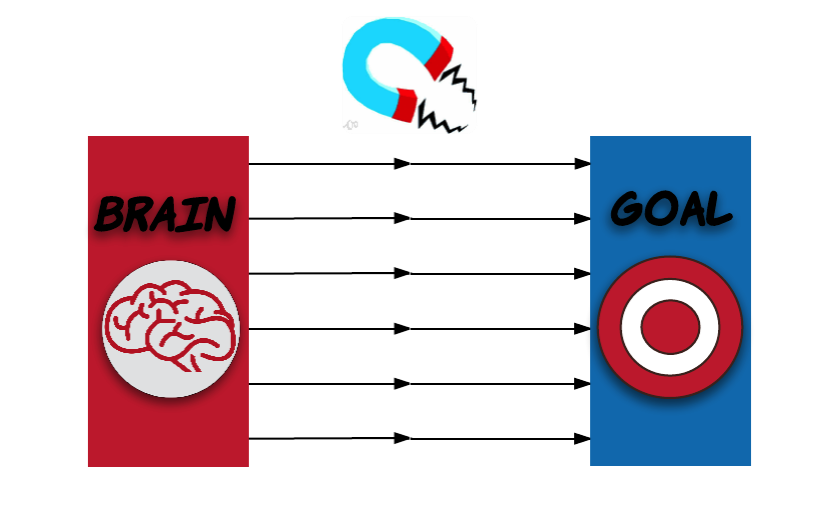
But your work environment is chaotic and your meetings are wasteful. See if you find anything familiar in this typical scenario.
Example of a Wasteful Meeting
Meeting Idea
Don’t get alarmed yet, but NEVER have a meeting to DISCUSS something. Only have meetings to DECIDE something.
Meeting Invite
The meeting announcement goes out saying, “Future Architecture Discussion.”
The body of the meeting says, “Let discuss the future architecture of our application that will support the upcoming requirements.”
Now you should be a little alarmed. This meeting is not looking like a good use of your time because there’s no definitive deliverable.
Meeting Time
The meeting time arrives and all the very opinionated, smart, capable, driven, and highly effective people arrive in the room and take seats around the table. For the purposes of this (nearly historically accurate) example, let’s assume there are 6 people attending the meeting.
If everyone arrives roughly on-time, you have already saved many minutes of the start-stop-restart cycle.
When the meeting host settles down in his or her chair WITHOUT a note pad and only a cup of coffee in hand, you should begin to raise the alert level to DEFCON-3.
This style of meeting will result in NO MINUTES and possibly NO DECISIONS.
Meeting Flow
During the meeting there is a flurry of different topics that come up. The meeting starts with architecture, but shifts subtly to some interesting topics:
- What if the marketing guys have got it all wrong?
- What if the CEO won’t fund the architecture?
- What if the current application technical issues cause the team to spend 50% of their effort fixing bugs instead of creating the new architecture?
- Etc.
Alert raised to DEFCON-2.
Meeting End
Near the end of the meeting, people begin to look at their watches saying they are have another meeting to attend. Nothing has been written down.
Like nuclear war, once the missiles are launched it’s too late to rescue this meeting. Raise the alert status to DEFCON-1 - Maximum alert.
Is There Another Way?
The example above is likely to resemble some of the meeting norms where you work. Inefficient and ineffective meetings might be a cultural norm, but it’s not the way it has to be.
With a little attention at each step in the meeting process you can improve the effectiveness and increase the collaboration in your daily meetings.

Example of a Productive Meeting
Meeting Idea with a Deliverable
The boss suggests that you gather the technical leaders and determine the next steps in the architecture evolution. She says, “Can you get with the team and develop a roadmap for the architecture?”
You’re empowered to create a ROADMAP. This is the deliverable from the meeting.
Meeting Invite With a Purpose
You think for a few minutes and decide on the goal for the meeting. “Create and record a roadmap for application architecture with a 5-year horizon.”
In addition, you come up with a rough agenda.
Agenda:A meeting invite with a purpose can result in 2x improvement because it primes the brains of all the participants to think about the problem ahead of time.
1. Review the marketing requirements
2. Record highest risk items
3. Create a list of architecture changes necessary to meet the business goals.
With a goal, you can take your 2x productivity to the bank by shrinking your meeting length by half.
With a goal and agenda, you could find a 3x impact. A meeting that normally takes an hour could take 20 minutes. The meeting ends when you’ve reached your defined goal and know how to get to the goal with a written plan.
Meeting Time With a Prompt Start
Depending on the business norms in your company you’ll experience very different meeting norms: for example, habitual tardiness to meetings. One way to shift business norms is to start on time.
In one meeting I hosted the attendees arrived on time, but were quite talkative about numerous subjects. In order to move the meeting forward, I said, “I can make your Friday shorter if we start on the review right now.” And then we got down to business.
Meeting Flow With a Plan
When it comes to meetings, there’s nothing like a good plan. A colleague quoted once, “Never attend a meeting that you don’t control.” Perhaps that’s a little extreme, but I would say you should always have a plan for the meetings you host, including slides and/or a facilitation plan.
At the minimum I create Powerpoint slides to keep the meeting focused on a specific outcome. When you have a representation of the goals, people have a much easier time keeping their focus.
Meeting Flow With a Turbo Charged Plan
Since people are very visual and actually engage with more energy when standing, consider using sticky notes or a whiteboard. Sticky notes are especially effective because they can be moved and re-arranged easily during a discussion.
Copy paper and blue masking tape are also very useful if you have information prepared before hand.
To increase the effectiveness of sprint grooming or planning meetings I often print out sprint backlog titles to tape to wall. Then I have the team create a task breakdown using sticky notes that are placed in order under the backlog item. I use the Post-It Plus application to take a picture of the the wall. The application recognizes eat individual sticky and exports the sticky notes in several formats. Excel is useful when I have a large quantity of notes. I then get the notes transcribed.
Meeting End With Closed Loops
At the end of the meeting you should have the following.
1. Actions recorded
2. Decisions recorded.
No matter what kind of meeting you’re holding, the end game must conclude with decisions and actions recorded.
When You Need a 5x Strategy
Under normal meeting circumstances a goal and agenda are sufficient to succeed. But sometimes a meeting deals with highly emotional or widely debated topics that need a 5x strategy. Without a 5x strategy, you’ll lose hours of time and potentially create even more tension.
Productivity of 5x is possible and realistic when you come prepared with a detailed facilitation plan that includes well planned activities. The plan should include strategies and activities for:
- dealing with peoples biases (mental or emotional baggage)
- effective brainstorming
- taking large quantities of creative input and move it towards a decision
- keeping the level of engagement high so that the participants keep their energy and intellect focused on the topic
- engagement during the meeting with boundaries
- any needed follow-up
The article “You Can Have Better Agile Meetings” provides a overview facilitation flow.
If collaboration attempts fail and the emotions or topics remain unresolved, the most common alternative is to call in the higher authority to resolve the issue.
This is a weaker approach that could result in temporary solution, but with a high probability that the parties will find “insurmountable issues" with the top down decisions as soon as the slightest obstacle is encountered.
Conversely, the gains from a 5x strategy can achieve a lasting consensus and full buy-in from your team members.
This is a weaker approach that could result in temporary solution, but with a high probability that the parties will find “insurmountable issues" with the top down decisions as soon as the slightest obstacle is encountered.
Conversely, the gains from a 5x strategy can achieve a lasting consensus and full buy-in from your team members.
Please leave a comment about the most debated topic that needs to be solved in your work place?
 , supreme Allied Commander
  invasions were executed.
 .
.